

When Expectations Rise Exemplary Leadership Must Follow
Mar 20, 2026
Organizations everywhere are navigating a moment defined by accelerating expectations. Workloads are heavier, uncertainty is persistent, and leaders find themselves balancing the needs of overwhelmed teams with the realities of a rapidly shifting workplace. It can feel like pressure is rising from every direction.
But pressure itself isn’t the problem.
The latest research from Wiley Workplace Intelligence reveals something that won’t come as a surprise for those who follow The Five Practices of Exemplary Leadership®: high expectations do not inherently erode engagement. In fact, when people feel connected, supported, and aligned, they’re not only willing to rise to the challenge, but they’re also energized by the momentum of shared values.
The findings point to a clear truth: how leaders show up matters more than the work itself. When leaders work in alignment and model the behaviors they expect from others, engagement becomes a collective strength as entire organizations work towards common goals.
Alignment Is a Powerful Accelerator of Engagement
When leaders at all levels align around shared priorities and consistent messaging, people feel a sense of clarity. That clarity fuels purpose. And purpose fuels engagement.
When alignment is strong, teams understand where they’re headed and how their work contributes. When it falters, the experience shifts: priorities conflict, decisions stall, and employees begin to question whether their effort will make a difference. This loop can not only lead to low morale and engagement, but stalled results.
Clarity and consistency, two cornerstones of effective leadership, help transform pressure into momentum.

People are over 6x more likely to report high engagement when leadership alignment is strong.
Aligned Leadership Strengthens Psychological Safety
Psychological safety doesn't thrive simply when workloads are manageable, it thrives when leadership behavior matches leadership intent.
When leaders communicate coherently, reinforce shared values, and respond predictably, even during intense and unpredictable times, employees feel safer expressing ideas, naming concerns, and taking risks. Trust grows because leaders demonstrate credibility, not just articulate it.
But when leadership becomes disjointed, the opposite occurs. Employees become cautious. Conversations narrow. Engagement dims. As the old Albert Einstein quote says, “If you can’t explain it simply, you don’t understand it well enough.” Keeping that ethos in mind when gathering teams around ideas will ensure alignment and ultimately improve engagement.

77% of respondents reported high psychological safety when leadership is aligned.
Manager Capacity Is Foundational to a Safe, Trusting Climate
A surprising, but important, insight from our research: psychological safety is deeply influenced by manager capacity.
When managers are stretched thin, constantly reacting, or lacking time to think, their interactions become rushed. Even well-intended feedback can feel abrupt or misaligned. Over time, these small moments accumulate into environments where people hesitate to speak up.
When managers have the space, support, and tools to lead intentionally, their steadiness creates the conditions in which trust takes root, building psychological safety and improving engagement.
An important element of creating meaningful leadership relationships is taking time to get to know each employee, how they prefer to receive feedback, how they navigate change, what inspires them, and more. Having the capacity to build those relationships is vital to building thriving organizations.

84% reported high psychological safety with managers who had more capacity.
Performance Intensity Alone Doesn’t Reduce Engagement
It’s intuitive to assume that heavier workloads drive disengagement. But the data tells a more nuanced story.
High expectations don’t inherently damage motivation or commitment. What undermines engagement is:
- Misalignment: When leaders send conflicting signals.
- Overload without support: When performance demands rise but managers lack the capacity to guide through them.
- Breakdown in trust and transparency: When messaging and actions diverge.
Engagement isn’t a casualty of intensity. It’s a casualty of inconsistency.
When leaders at every level model clarity, courage, and credibility, people remain committed, even when demands are high.
Most Employees Believe High Expectations and High Engagement Can Coexist
Despite rising workloads, employees overwhelmingly believe that engagement doesn’t need to suffer if leaders create the right conditions for success.
This reinforces a central truth of leadership: people are willing to meet high expectations when they trust the leaders who set them.
Employees aren’t resistant to ambition. They’re resistant to environments where ambition isn’t matched with alignment, support, or shared purpose.
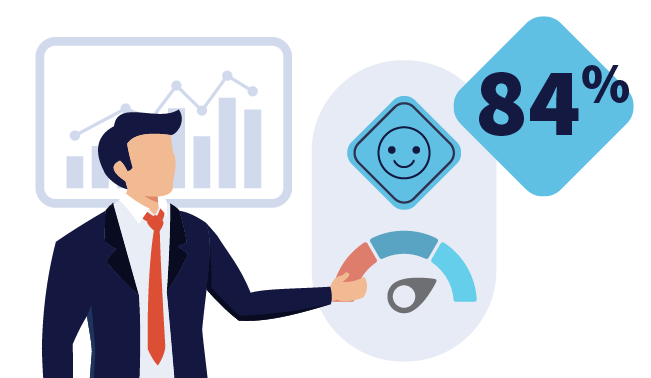
84% believe high expectations and high engagement can coexist.
This message resonates strongly with the idea that leadership is a relationship, and relationships flourish when leaders practice clarity, consistency, and care.
Two Ways Leaders Can Sustain Engagement While Demands Increase
The research identifies two actions leaders can take now to strengthen engagement, even in periods of heightened pressure.
1. Strengthen Alignment Across All Levels
- Ensure messaging, expectations, and behaviors are consistent.
- Make priorities visible and reinforce how each person’s work contributes to shared goals.
- Avoid mixed signals that cause employees to second-guess direction or intent.
2. Support and Stabilize Manager Capacity
- Provide managers with time and tools to lead deliberately, not reactively.
- Encourage protected thinking time to increase presence and reduce overload.
- Equip managers to create environments where honesty and curiosity feel safe.
Organizations don’t have to choose between high performance and high engagement. The data makes that clear.
When leaders operate in alignment, act with integrity, and support the people closest to the work, engagement can thrive.
Demands may be rising, but so is the opportunity for leaders to inspire, elevate, and set the example for what effective leadership looks like in times of change.
Wiley’s suite of professional solutions provides a structure and common language to help empower entire organizations with the skills needed to get to the next level. From building better teams with The Five Behaviors®, and improving understanding to create engaged, collaborative, and adaptive cultures with Everything DiSC® on Catalyst™, helping you make confident hiring decisions with PXT Select®, or unlocking your leaders’ potential to drive team and organizational performance with 360 feedback from The Leadership Challenge®, Wiley has innovative solutions that help make the workplace a better place.
Wiley Workplace Intelligence conducts in-depth research on key workplace issues by gathering insights from individual contributors, managers, and leaders. Wiley Workplace Intelligence then analyzes these findings to provide actionable solutions that are shared in our blog.