

The Ripple Effect of Leadership Behavior
Jul 24, 2026
Picture two team meetings happening at the same hour, in two different companies. In the first, the leader walks in visibly rattled, distracted, short with questions, and within minutes the whole room has picked up the same edge. People start talking faster, defending their work before anyone's asked them to, glancing at the clock. In the second, the leader walks in carrying just as much pressure, a missed deadline, a tough conversation, but sets it aside long enough to run a steady meeting. The team leaves that room calmer than they entered it.
Same pressure. Two very different outcomes. The difference wasn't the workload; it was the leader.
New research from Wiley Workplace Intelligence surveyed 1,591 people on their stress and burnout, and the findings offer a lesson familiar to anyone who follows The Five Practices of Exemplary Leadership®: leaders don't just manage stress. They model it, whether they mean to or not.
Leaders Model the Way, for Better or Worse
The clearest signal in the data is about leadership behavior. Employees with very or extremely stressed managers rate their own stress 1.3 points higher than those with calmer managers. What a leader shows on the outside travels directly to the people who follow them.
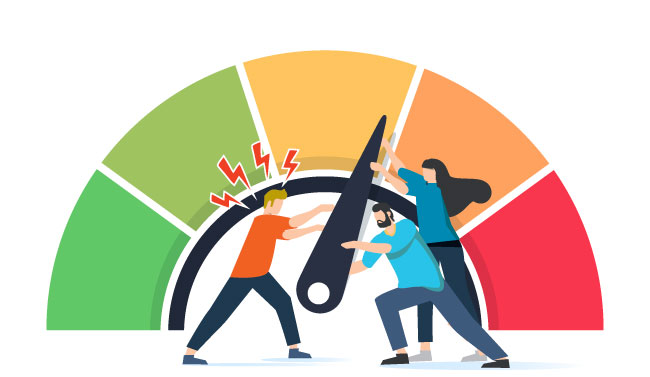
Employees with stressed managers rate their own stress higher.
This is Model the Way in its truest form. Exemplary leaders understand their behavior sets the standard others follow, and that standard isn't limited to values named in a meeting. It includes the composure, or lack of it, a leader brings to the room. Staying visibly steady under pressure quietly teaches a team how to carry pressure too. That doesn’t mean toxic positivity (also known as ‘glossing’), but it does mean having a knowledge of how to balance legitimate complaints or constructive criticism vs. toxic cycles of venting or frustration without action to follow it up.
Leaders aren't the only source, though. Peer-to-peer stress spreads at a moderate to strong rate, one that outpaces leader-to-employee contagion. A team's daily climate, from the tone in a shared chat channel, or the energy in a meeting, is its own transmission line. Exemplary leadership, then, isn't only about self-management. It's about shaping the climate a whole team stands in.
Trust Is What Breaks the Cycle
The research also points to what stops the spread, and it lines up closely with the behaviors The Five Practices call out as the foundation of credible leadership: trust and action.
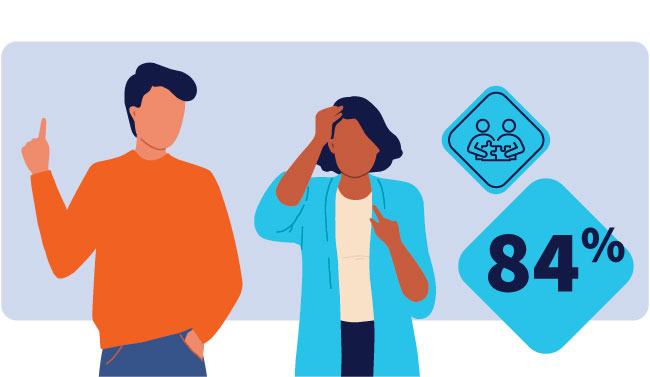
84% feel psychologically safe after making a mistake.
We found that 84% of employees feel psychologically safe after making a mistake, making it the single most consistent buffer against stress contagion in the data. This is Encourage the Heart at work. When people trust that a relationship holds steady under pressure, a leader's stress is far less likely to become the whole team's stress. Safety doesn't remove the stress; it stops it from spreading.
The second protective factor is responsiveness. Our research showed that 60% of employees say their manager takes real action on burnout, not just an acknowledgment. This is Enable Others to Act in practice. Empathy alone doesn't buffer contagion. Action does. Naming the problem aloud and following it with a concrete change, whether that's redistributing work or adjusting a deadline, removes the obstacle before it becomes someone else's burden to carry.
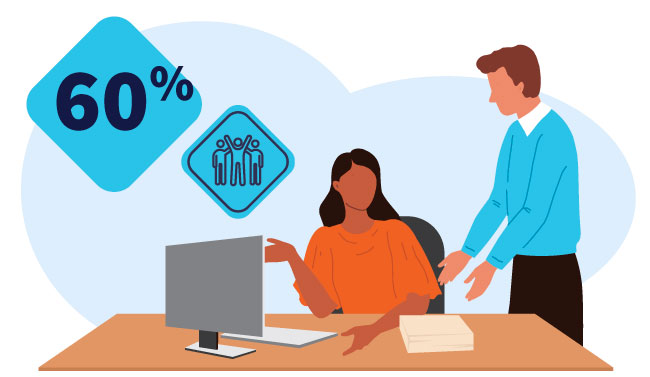
60% say manager acts on burnout.
Two Ways Exemplary Leaders Can Stop Stress from Spreading
The research points to two specific, practice-based actions leaders can implement now.
1. Model composure on purpose
-
Name your own stress before your behavior names it for you.
-
Treat visible steadiness as a leadership skill, not a personality trait.
-
Remember that your team is reading your reactions as closely as they're reading your words.
2. Turn concern into action
-
Follow every conversation about burnout with a concrete next step.
-
Protect psychological safety most deliberately in the minutes right after a mistake.
-
Watch team climate, not just individual stress since peer contagion moves faster than leader-to-employee contagion.
Leaders can't control every stressful moment that lands on their team, but The Five Practices® provide a map for what happens next. Naming stress, following it with visible action, and protecting the trust already built into a team are what separate organizations where pressure compounds from organizations where it gets absorbed.
Stress may be contagious, but so is steadiness. The leaders who understand this aren't the ones who eliminate all stress. They're the ones who model steadiness, act on what they see, and give their teams a reason to trust that the relationship holds, even under pressure.
Wiley’s suite of professional solutions provides a structure and common language to help empower entire organizations with the skills needed to get to the next level. From building better teams with The Five Behaviors®, and improving understanding to create engaged, collaborative, and adaptive cultures with Everything DiSC® on Catalyst™, helping you make confident hiring decisions with PXT Select®, or unlocking your leaders’ potential to drive team and organizational performance with 360 feedback from The Leadership Challenge®, Wiley has innovative solutions that help make the workplace a better place.
Wiley Workplace Intelligence conducts in-depth research on key workplace issues by gathering insights from individual contributors, managers, and leaders. Wiley Workplace Intelligence then analyzes these findings to provide actionable solutions that are shared in our blog.