


The Loyalty Illusion: How Your Leaders Impact Retention
Nov 13, 2026
An employee can meet expectations, contribute to the team, and plan to be with their organization a year from now, while still questioning whether it's where they truly want to be.
That's the core challenge behind what we call the loyalty illusion: employees who expect to stay but not necessarily by choice. And in a job market where opportunities can feel uncertain, the distinction between staying and wanting to stay deserves more attention from leaders as they consider how to build organizations that attract and retain talent.
Our latest research found that 82% of employees said they're likely to still be with their current employer 12 months from now. But when we asked whether they'd still choose to stay if the job market were ideal, with plenty of opportunities available, one in four couldn't confidently say yes.
The findings suggest that retention tells only part of the story. To understand what makes employees want to stay, leaders need to look more closely at the everyday experiences shaping their confidence in the organization and their future within it.
Three factors stand out: whether people see priorities reflected in everyday decisions, whether they have the capacity to absorb change, and whether their work allows them to use their strengths and continue growing.
Change Is Happening. Is Your Team Ready for It?
Organizational change is constant in today's workplace. New priorities, shifting expectations, evolving technology, and restructuring can all affect how employees experience their work.
In fact, 48% of employees say their organization has changed "a lot" in the past two years.

48% report high levels of change over the last year.
That level of change makes an important leadership question worth asking: Are people equipped to absorb what's coming next?
Our research found a meaningful connection between employees' capacity for change and their level of doubt about staying. Employees we identified as “stuck stayers” (respondents whose answers pointed to staying by necessity, financial or otherwise, rather than choice) are three times as likely as “content stayers” (those who indicated they are happy in their roles and would stay even if they did not have to) to say they lack the capacity to handle change.
This distinction matters. Change itself doesn't necessarily create doubt. How prepared people feel to navigate it can make a significant difference.
Consider a team that's already managing competing priorities and a full workload when leadership announces another major initiative. The change may make strategic sense, but employees are left wondering what gets deprioritized, where they'll find the time, and whether they have the support to make it happen.
When leaders introduce change without considering those realities, even well-intentioned decisions can create uncertainty.
Leaders need to make change manageable, not just communicate that it's necessary. That means understanding what teams are already carrying, being clear about what matters most, and making thoughtful decisions about what can wait.
Growth Is More Than a Career Path
Another important finding in our research centers on whether employees feel they're continuing to develop. It's not just about promotions or moving into a new position. Employees also want opportunities to use what they're good at, build new capabilities, and see how their contributions can evolve.
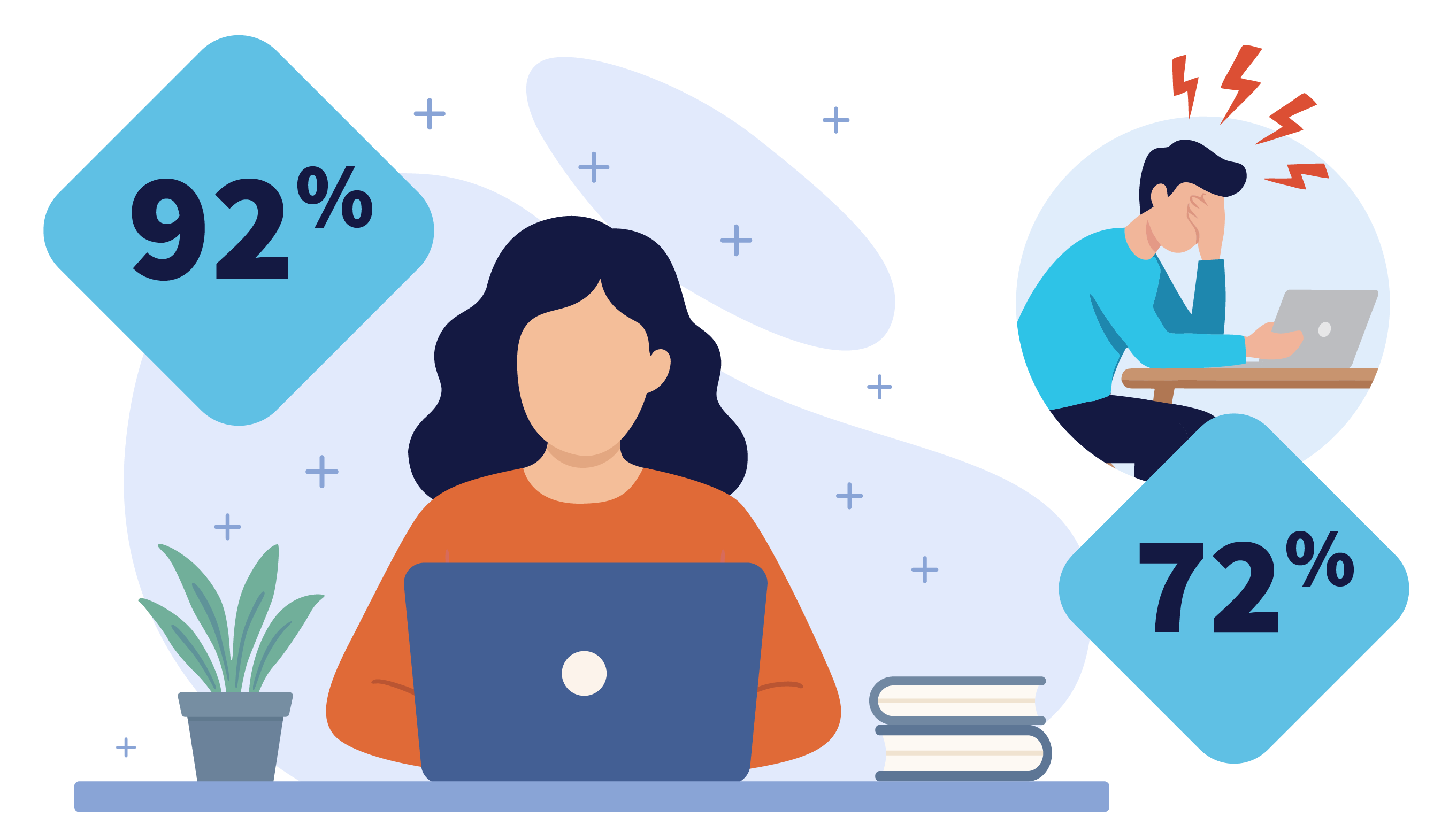
92% of “content stayers” say they continue to learn vs. only 72% of “stuck stayers.”
The differences between content stayers and stuck stayers are particularly revealing.
| Content Stayers | Stuck Stayers | |
|---|---|---|
| Continue to Learn | 92% | 75% |
| Role Uses Their Strengths | 88% | 64% |
| Energy to Grow | 92% | 61% |
The gap is especially pronounced when it comes to having the energy to grow. And that finding deserves attention: across all the factors we tested together, energy to grow had the strongest relationship with lower employee doubt. Learning opportunities also remained a meaningful factor.
In other words, development isn't simply something employees appreciate when time allows. It is an important part of whether they feel confident about their future.
Think about an experienced employee who consistently delivers strong results. Their manager knows they can be counted on, so the same responsibilities continue to come their way. Over time, however, that employee may begin to wonder whether they're building new capabilities or simply becoming more efficient at doing the same work.
Exemplary leaders recognize that performance today doesn't necessarily mean an employee feels optimistic about tomorrow.
They make time to understand people's strengths, ask what they want to learn, and look for opportunities to stretch their capabilities. Sometimes that means a new responsibility. Other times, it means approaching an existing role differently or contributing in a way that makes better use of someone's abilities.
The goal isn't to promise everyone a promotion. It's to help people see that their growth remains part of the organization's priorities.
Leaders May Be More Optimistic Than Their Teams
There's another finding that adds an important dimension to the conversation: leaders and employees don't necessarily experience the organization in the same way.

Executives report higher levels of excitement.
Executives report an average excitement level of 4.4 on a five-point scale, compared with 4.0 among individual contributors.
The difference may seem modest, but it points to a potential disconnect between the people setting organizational direction and the people experiencing that direction every day.
Leaders often have greater visibility into strategic plans, upcoming opportunities, and the reasons behind organizational decisions. Individual contributors may see the immediate impact without having the same context.
That gap can shape how people respond to change and how confident they feel about the future.
Leaders shouldn't assume that because they're excited about what's ahead, their teams feel the same way. They need to create opportunities to listen, understand concerns, and communicate the thinking behind decisions.
This is also where honest conversations become particularly important. Asking employees what feels manageable, what is getting in the way, and where they'd like to grow can reveal concerns that engagement scores and retention data alone might miss.
Listening is a starting point, but follow-through is what builds confidence. When employees raise concerns and see leaders respond with meaningful action, they have a stronger reason to trust the direction they're being asked to follow.
Three Ways Leaders Can Reduce Employee Doubt
The research points to three practical opportunities for leaders who want to move beyond retention and build greater employee confidence.
1. Make people priorities visible in everyday decisions.
-
Connect organizational priorities to the decisions employees experience in their daily work.
-
Demonstrate that employee development, well-being, and growth are priorities through the time and resources you protect.
-
Explain the reasoning behind difficult decisions, especially when priorities compete.
2. Check your team's capacity before introducing more change.
-
Understand what employees are already managing before adding new initiatives or responsibilities.
-
Be explicit about what should take priority and what can be deprioritized.
-
Create opportunities for employees to raise concerns about workload, resources, and their ability to adapt.
3. Keep growth in view.
-
Have regular conversations about employees' strengths, interests, and development goals.
-
Look for ways to incorporate learning and new challenges into existing roles.
-
Make sure development conversations lead to meaningful opportunities and next steps.
These actions don't require leaders to have every answer. They require them to pay attention to what employees are experiencing and take responsibility for creating better conditions for people to contribute and grow.
Retention Is a Result. Confidence Is Built Through Leadership.
The loyalty illusion reminds us that an employee's intention to stay doesn't necessarily mean they're confident about their future.
Organizations can report strong retention while employees quietly question whether they have the capacity to keep adapting, whether their strengths are being put to use, or whether there's room for them to grow.
Leaders have an important role in closing that gap. It starts with making priorities visible, understanding what teams can realistically absorb, and treating employee development as an ongoing responsibility rather than an occasional conversation.
People don't need a guarantee that everything will stay the same. They need confidence that their leaders will help them navigate what's changing and create opportunities for what's next.
That's how organizations move beyond simply keeping people and begin building workplaces where people genuinely want to stay.
Wiley’s suite of professional solutions provides a structure and common language to help empower entire organizations with the skills needed to get to the next level. From building better teams with The Five Behaviors®, and improving understanding to create engaged, collaborative, and adaptive cultures with Everything DiSC® on Catalyst™, helping you make confident hiring decisions with PXT Select®, or unlocking your leaders’ potential to drive team and organizational performance with 360 feedback from The Leadership Challenge®, Wiley has innovative solutions that help make the workplace a better place.
Wiley Workplace Intelligence conducts in-depth research on key workplace issues by gathering insights from individual contributors, managers, and leaders. Wiley Workplace Intelligence then analyzes these findings to provide actionable solutions that are shared in our blog.